Braces or Aligners: Which to Choose for a Perfect Smile?
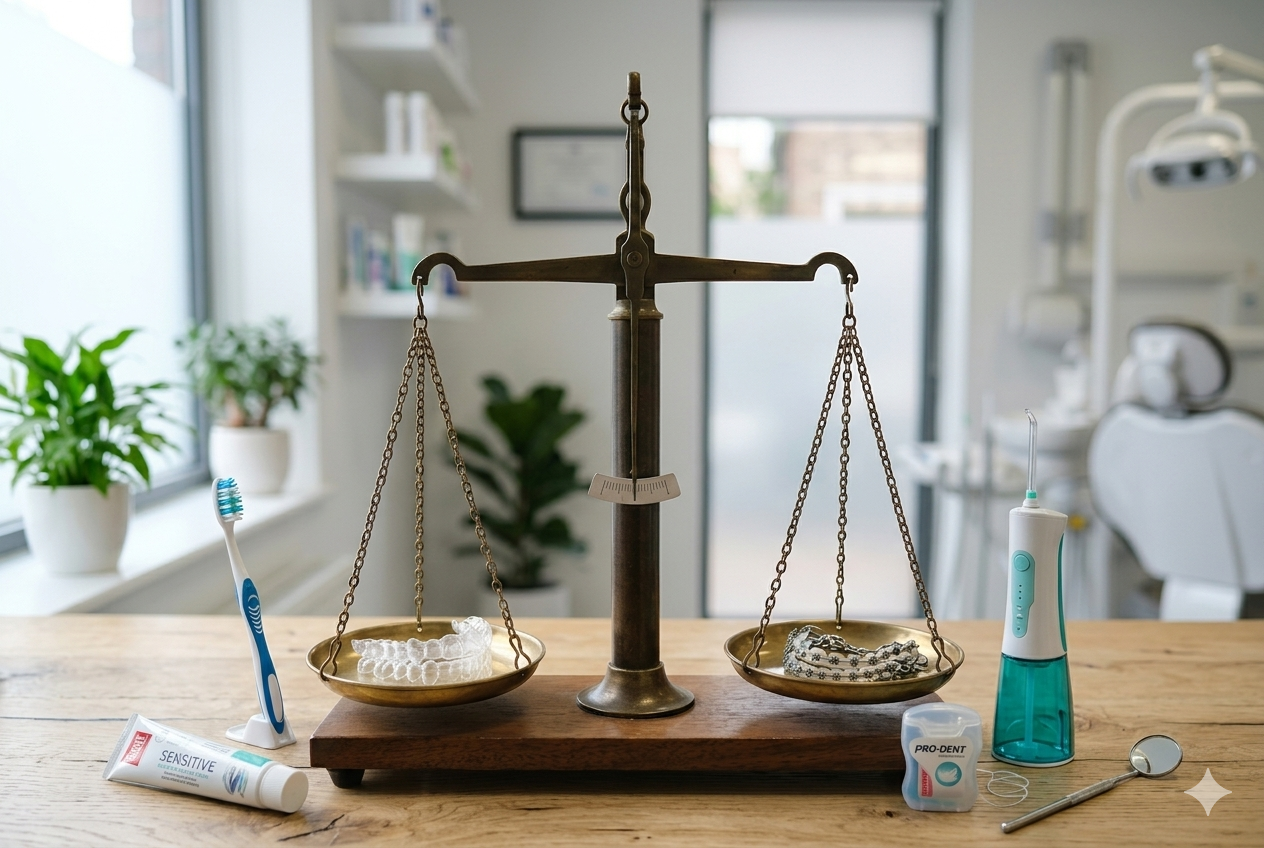
Today, straight teeth are not just a matter of aesthetics but also a guarantee of overall body health. When it comes to correcting a bite, patients usually choose between two favorites: classic braces and modern aligners. Each method has its own “superpowers,” so let’s figure out what is right for you.
1. Braces: The Tried-and-True Classic
These are fixed structures attached to the teeth. They can be made of metal (the most reliable), ceramic, or sapphire.
- Pros: Versatility for complex cases, continuous treatment, and more affordable pricing for metal models.
- Cons: Require special hygiene, dietary restrictions apply, and they are visible on the teeth.
2. Aligners: Invisible Comfort
A series of clear trays made from an individual 3D mold, replaced every 1–2 weeks.
- Pros: Esthetic appeal, convenience (removable while eating), and predictable results thanks to digital planning.
- Cons: Require high discipline (must be worn 22 hours a day) and are not suitable for extremely complex pathologies.
Comparison Table
| Characteristic | Braces | Aligners |
|---|---|---|
| Visibility | Visible | Almost invisible |
| Hygiene | Complex | Standard |
| Diet | Restrictions apply | No restrictions |
Important Advice
The final decision always rests with your orthodontist. Only after an X-ray and examination can it be determined which system will work faster and more effectively in your specific case. Take the first step toward a consultation today!