Curettage of Periodontal Pockets: Why Is It Needed and How Is It Performed?
Healthy gums are the foundation of strong teeth. However, during inflammatory processes such as periodontitis, voids called periodontal pockets form between the gums and the teeth. If they are not cleaned in time, this can lead to the loosening and loss of even healthy teeth. One of the most effective methods for solving this problem is curettage.
What Is Curettage?
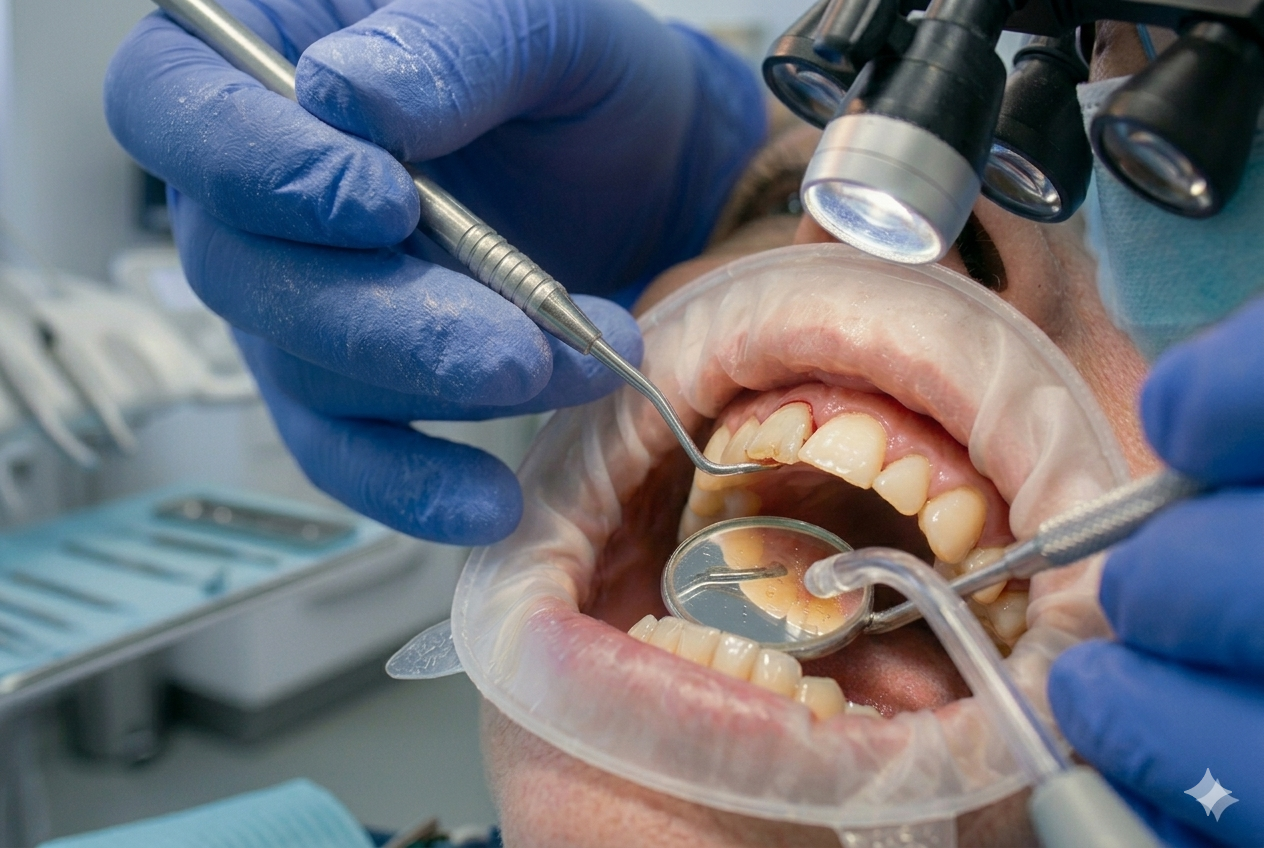
Curettage of periodontal pockets is a dental procedure during which the doctor removes subgingival deposits (tartar), plaque, and infected tissue from the walls of the gingival pocket. Unlike a standard cleaning, curettage works deeper—in areas where a toothbrush or ultrasound are ineffective during a surface examination.
Types of Procedures
Depending on the depth of the pockets and the severity of the disease, dentists distinguish between two main methods:
Closed Curettage
- Performed if the depth of the pockets does not exceed 3–4 mm.
- Executed without cutting the gums using specialized instruments (curettes) or ultrasonic devices (e.g., Vector).
- The procedure reduces inflammation and promotes the “reattachment” of the gum to the tooth.
Open Curettage
- Prescribed for deep pockets (over 5 mm).
- Involves a small incision of the gum to provide full visual control and access to clean the tooth root.
- Micro-sutures are applied after the cleaning.
Results and Benefits
| Indicator | Effect After Treatment |
|---|---|
| Breath | Complete elimination of unpleasant odor (halitosis). |
| Gum Tissue | Reduction of swelling, pain, and bleeding. |
| Tooth Stability | Stopping bone destruction and strengthening loose teeth. |
Important Tip
After the procedure, it is recommended to follow a diet (avoiding spicy, hot, and hard foods) and carefully follow the doctor’s hygiene instructions to accelerate healing. If you notice bleeding gums, do not delay your visit to a periodontist!