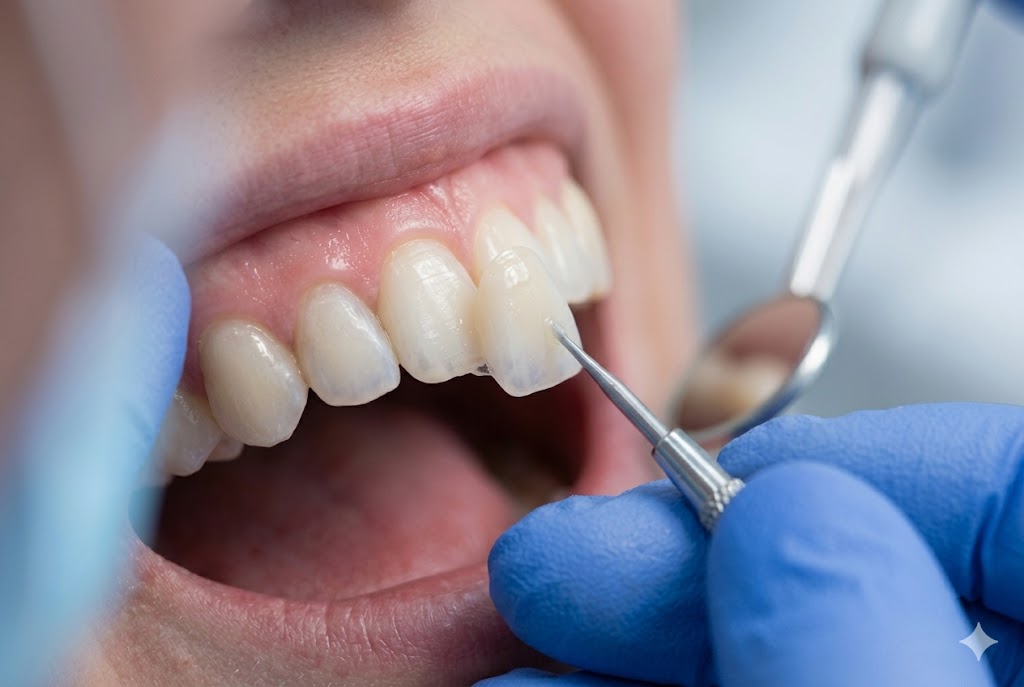
Veneers: The Path to a Perfect Smile in Just a Few Days
Modern dentistry has long moved beyond simple tooth treatment. Today, it is also about aesthetics, confidence, and comfort. One of the most popular ways to get a “Hollywood smile” is veneers.
What Are Veneers?
Veneers are ultra-thin shells (plates) ranging from 0.2 to 0.7 mm in thickness, which are fixed to the front surface of the teeth. They act as “new enamel,” concealing any visual imperfections.
What Problems Do They Solve?
Veneers are an aesthetic restoration tool used when the following indications are present:
- Color change: when professional whitening cannot cope (for example, due to “tetracycline teeth” or fluorosis).
- Cracks and chips: masking mechanical damage to the enamel.
- Imperfect shape: teeth that are too small or have uneven edges.
- Gaps: closing diastemas and tremas (spaces between teeth).
Types of Veneers: What to Choose?
Depending on the material and installation method, veneers are divided into two main types:
Ceramic Veneers (Porcelain)
- Manufacturing technology: custom-made in a dental laboratory using an individual impression of the patient.
- Advantages: maximum natural appearance, high color stability (do not darken from coffee or wine), service life is 10–15 years.
- Microprosthetics features: require minimal trimming of the enamel.
Composite Veneers
- Manufacturing technology: a dentist shapes them directly in the patient’s oral cavity using light-cured composite material.
- Advantages: high speed (one visit is enough) and an affordable price.
- Operational features: shorter service life (3–5 years), can dull over time, and require regular polishing.
Lumineers and Ultraneers: these are ultra-thin ceramic shells that, in many clinical cases, allow for the procedure without prior trimming of your natural teeth.
Comparative Analysis: Advantages and Disadvantages
| Advantages of Using Veneers | Disadvantages and Limitations of the Method |
|---|---|
| Aesthetics: completely replicate the color and translucency of natural teeth. | Need for preparation: classic ceramic restorations require trimming of the enamel. |
| Resistance: ceramic is inert to the effects of plaque, food colorants, and nicotine. | Irreversibility: once the enamel layer is removed, the tooth must always be covered by an artificial structure. |