Children’s dentistry
Prices- Children’s dentistry
- Orthodontic treatment
- Professional hygiene and periodontics
- Orthopedic treatment
- Therapeutic treatment
- Sleep treatment
- Surgery
- Computer diagnostics
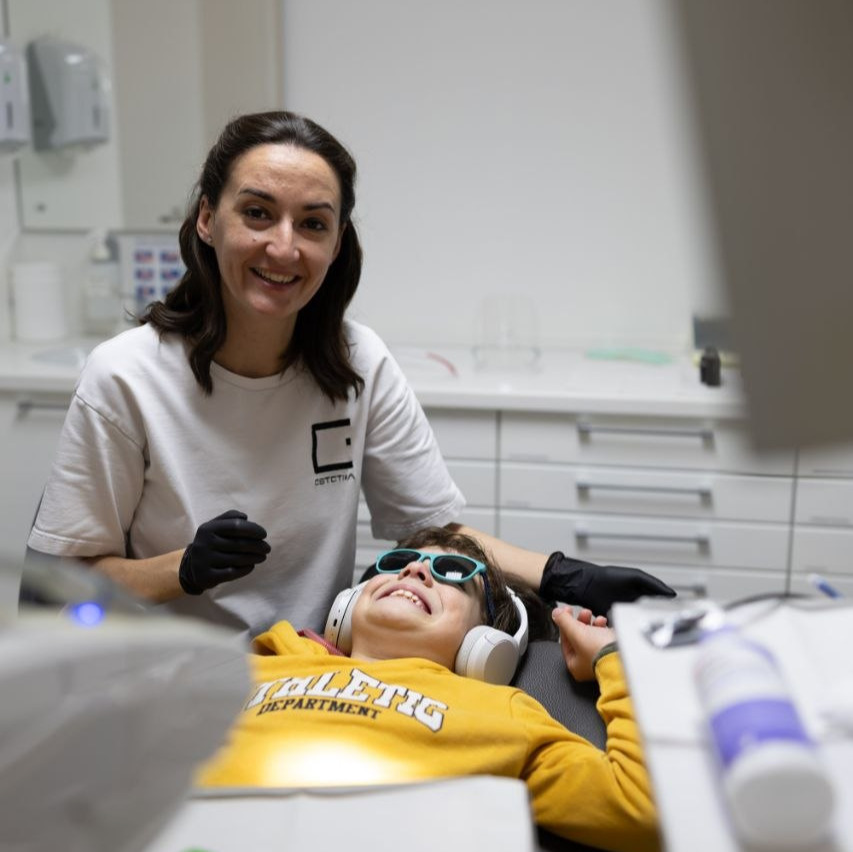
Children’s dentistry is a special area of medicine. It is very important that the little patient has the best first impressions from visiting the dental office and getting to know the doctor.
Baby teeth play a very important role in the health of the child, in the formation of his speech apparatus. They will hold a place in the jaw for the growth and development of permanent teeth. Therefore, they should be treated on time and very carefully.
We all know that professional oral hygiene is very important. Our specialists will not only make it, but also teach children how to properly brush their teeth at home, recommend toothbrushes and pastes according to the child’s age.
In our clinic, we have the opportunity to provide a full range of services for the treatment of small patients. This is classic restorative dentistry, or tooth restoration with the help of the ICON system at home, when there is practically no mechanical intervention in the hard tissues of the tooth.
It is important to prevent damage to the root canals of teeth in childhood. But, if this has already happened, then the treatment will take place at a high level, with compliance with all modern standards. This can also be said about surgical interventions that are necessary for the normal development of tooth rows, or are orthodontically justified.
It should be noted separately that, if necessary, small patients can receive treatment “in their sleep”. It can be general anesthesia, sedation or nitrous oxide. Modern equipment and professional anesthesiologists are at their service.
Specialists in these procedures:
Frequently Asked Questions
Baby tooth restoration – from 2000 UAH
Pediatric root canal treatment – from 2600 UAH.
Baby tooth extraction – from 1400 UAH
Sedation (medical sleep) costs from 3200 UAH per hour
You can and should bring your child for their first check-up from the moment their teeth start erupting (around 6 months). The primary examination is very important! During the visit, the doctor can identify early malocclusion (bite) pathologies or harmful habits that may negatively affect dental health.
- Explain to parents the harm of certain habits, such as thumb sucking, pacifier use, and mouth breathing;
- Teach how to manage these habits;
- Identify potential issues (if any) and refer to related specialists – ENT, orthodontist, or speech therapist (if necessary);
- Teach oral hygiene. Parents are responsible for a child's oral hygiene until the age of 10.
We recommend:
- A check-up with a pediatric dentist every 3-6 months;
- A check-up with an orthodontist once a year;
- Professional dental cleaning every 6 months.
There is a misconception that since baby teeth eventually fall out, they don't need treatment.
This is fundamentally wrong! An infection in a baby tooth can spread to the permanent tooth bud, leading to various consequences. Moreover, the presence of chronic infection in the mouth negatively impacts the child's overall immunity and health.
Furthermore, early extraction of a baby tooth can lead to future issues with the eruption and alignment of permanent teeth. This creates a need for orthodontic treatment, which requires a lot of time, effort, and financial resources.
The first consultation with an orthodontist should take place between the ages of 3 and 6. If there is a tendency toward malocclusion, orthodontic treatment should begin during the mixed dentition stage, when both baby and permanent teeth are present.
In complex situations, we recommend treatment under general anesthesia (medical sleep).
It is completely safe and allows all stages of treatment to be performed with maximum quality in a single visit, sparing the child from psychological stress.
There are no age restrictions for general anesthesia. At the "Estetika" dental center, we perform general anesthesia with Sevoflurane (Sevorane) for children from the moment the need for treatment under anesthesia is identified, typically from 3-4 years old.
Our youngest patient was 1 year and 8 months old.